
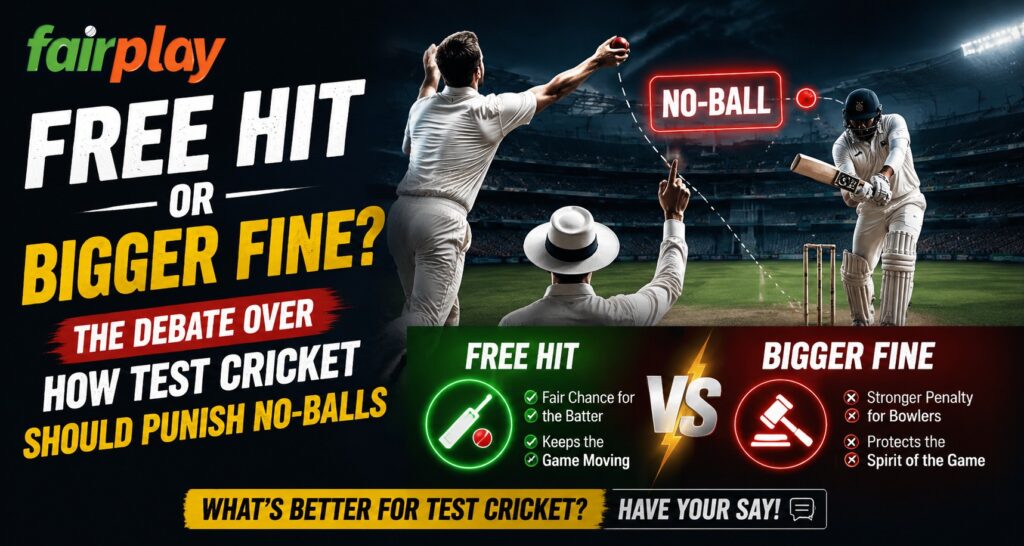
No-balls have always been one of the most debated moments in cricket because a single delivery can change the direction of a match. In modern cricket discussions, fans and experts continue to question whether existing penalties are enough or if stricter punishments are needed. Cricket followers using platforms like Fairplay24 can stay connected with the latest cricket discussions, match updates, and rule-related conversations as the sport continues to evolve.
The debate has become stronger around Test cricket, where every delivery carries greater importance. Unlike shorter formats, a mistake in a long-format match can influence sessions, partnerships, and even the final result. This has led many to discuss whether Test cricket should introduce stronger consequences for no-balls.
Understanding the Current No-Ball Rules
A no-ball occurs when a bowler delivers an illegal delivery according to cricket laws. The most common reasons include overstepping the crease, dangerous bowling actions, or fielding violations.
Currently, a no-ball usually results in:
- One extra run added to the batting side.
- The delivery not counting as a legal ball.
- A free hit in limited-overs cricket in most situations.
However, Test cricket does not generally use the free-hit rule, which is why the debate continues.
Why Some Support the Free Hit in Test Cricket
Many supporters believe introducing a free hit after a no-ball could create a stronger deterrent for bowlers. The idea is that bowlers would become more careful, reducing avoidable mistakes.
Arguments in favour of a free hit include:
Greater Accountability
A free hit would make bowlers more responsible because one mistake could immediately create a scoring opportunity.
More Exciting Moments
A free-hit delivery can add excitement and create additional strategic situations for batters and teams.
Consistency Across Formats
Since limited-overs cricket already uses free hits, some believe Test cricket could adopt a similar approach for consistency.
Why Others Oppose the Free Hit Idea
Not everyone agrees that a free hit belongs in Test cricket. Traditionalists argue that the longest format has a different identity and should maintain its unique rules.
Reasons against introducing free hits include:
- Test cricket already rewards patience and skill.
- A single mistake may receive excessive punishment.
- Bowlers already face pressure due to long spells.
- The balance between bat and ball could change.
Many believe that Test cricket should avoid adding rules designed mainly for entertainment.
Should Bigger Fines Be Introduced Instead?
Another suggestion is increasing penalties for repeated no-balls rather than introducing a free hit. This approach would focus more on discipline rather than changing the contest between bat and ball.
Possible solutions include:
- Higher match fees penalties.
- Stronger disciplinary action for repeated offences.
- More monitoring of bowling techniques.
- Greater emphasis on accuracy during training.
Supporters believe this would maintain traditional Test cricket while encouraging better discipline.
The Impact of No-Balls in Test Matches
A no-ball can have a much bigger impact in Test cricket compared to shorter formats. Because matches last several days, one extra delivery can change momentum.
Important situations where no-balls matter include:
- Dismissing a batter on a no-ball.
- Breaking a crucial partnership.
- Creating additional scoring opportunities.
- Changing session momentum.
A missed opportunity for a bowler can sometimes decide the outcome of a match.
Balancing Tradition and Modern Cricket Needs
Cricket has changed significantly over the years, with technology and new rules improving fairness and entertainment. However, Test cricket continues to protect many traditional elements of the game.
The challenge for lawmakers is finding a balance between:
- Maintaining the character of Test cricket.
- Reducing avoidable mistakes.
- Protecting fairness.
- Improving viewer interest.
Any major rule change would require careful consideration.
Technology’s Role in Monitoring No-Balls
Technology has already changed how cricket handles no-ball decisions. Television replays and automated systems Help umpires make more accurate calls.
Modern tools can assist with:
- Checking front-foot violations.
- Improving decision accuracy.
- Reducing human errors.
- Maintaining consistency.
As technology improves, cricket may explore new ways to manage illegal deliveries.
Following Cricket Rule Updates Digitally
Fans today want quick access to rule changes, match analysis, and cricket discussions. Digital platforms help followers stay updated with developments across international cricket.
Users accessing Fairplay24 in Login sections can explore digital features while following cricket-related information. Staying updated helps fans understand how changes may affect future matches.
Mobile Access and Cricket Discussions
Mobile platforms have made cricket information easier to access. Fans can follow discussions, updates, and analysis through smartphones.
The Fairplay24 App provides mobile accessibility for users who prefer digital convenience. Through platforms connected with Fairplay24 Com, cricket followers can stay engaged with the latest sports conversations.
Conclusion
The debate over free hits or stronger punishments for no-balls highlights the challenge of balancing fairness, tradition, and entertainment in Test cricket. While some believe a free hit would encourage greater discipline, others feel it could change the nature of the longest format.
A bigger fine or stricter monitoring may offer an alternative solution without altering the contest too much. Whatever decision cricket authorities make, the goal will remain the same: improving fairness while protecting the spirit of Test cricket.
Frequently Asked Questions
Does Test cricket currently have a free hit after a no-ball?
No, the free-hit rule is mainly used in limited-overs formats and is not a standard feature of Test cricket.
Why are no-balls important in Test cricket?
A no-ball can change match momentum by giving batters another opportunity and adding extra runs.
Should Test cricket introduce free hits?
Some believe it would improve discipline, while others feel it could affect the traditional balance of the format.
What other punishments could apply for repeated no-balls?
Possible options include financial penalties, disciplinary action, and improved monitoring.
How does technology help with no-ball decisions?
Technology helps umpires detect front-foot violations and improve decision accuracy.
What is Fairplay24 App used for?
Fairplay24 App refers to a mobile-based platform option that allows users to access digital features conveniently.