
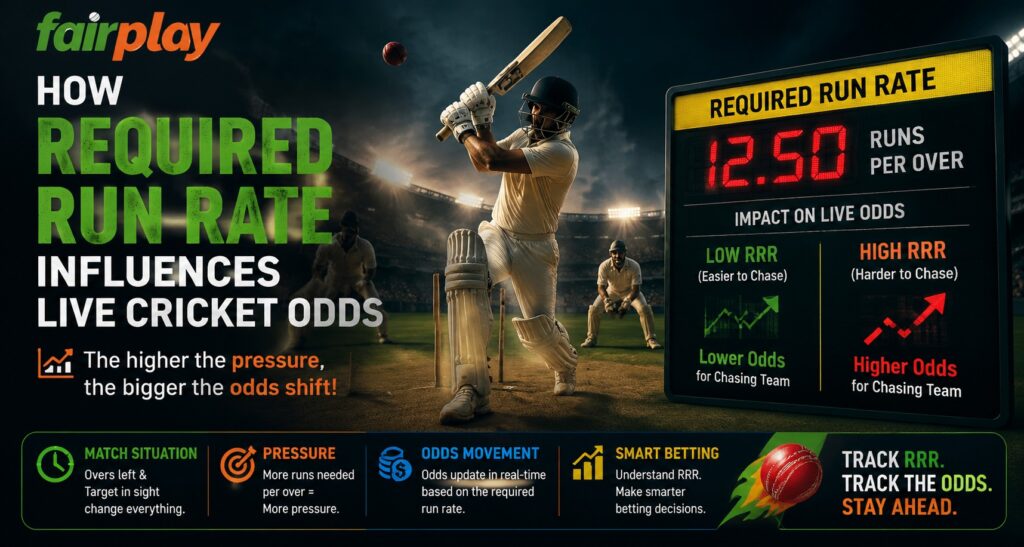
Live cricket matches can change direction within a few overs, and one of the most important factors behind these changes is the required run rate. It helps measure the pressure on a batting team and influences how the match situation develops. Fairplay24 users who follow cricket analysis should understand how required run rate works and why it can affect live market expectations during a match.
Required run rate is not just a number on the scoreboard. It provides insight into the difficulty of the chase and helps explain why teams adjust their batting approach as the innings progresses.
What Is Required Run Rate in Cricket?
Required run rate (RRR) shows how many runs a batting team needs to score per over to reach a target within the remaining deliveries.
The basic calculation is:
Required Run Rate = Runs Needed ÷ Overs Remaining
For example:
- Target: 300 runs
- Current score: 200 runs
- Overs remaining: 10
Runs needed = 100
Required run rate = 10 runs per over
As the match moves forward, this number changes based on runs scored and wickets lost.
Why Required Run Rate Matters in Live Matches
Required run rate Helps teams understand the level of pressure during a chase. A low required rate usually gives batters more flexibility, while a high rate requires more aggressive decisions.
It can influence:
- Batting strategy
- Bowler selection
- Field placements
- Risk management
- Match momentum
A sudden increase in required run rate can completely change how teams approach the final stages of a game.
How Required Run Rate Influences Match Momentum
Cricket momentum often shifts when the required run rate changes quickly.
For example:
- A strong partnership can reduce pressure.
- Consecutive boundaries can bring the required rate down.
- A series of dot balls can increase pressure.
- Wickets can force batters to take more risks.
Because of this, live cricket analysis considers required run rate alongside other factors such as wickets remaining and player ability.
The Relationship Between Required Run Rate and Live Odds
Live cricket markets are influenced by changing match conditions. Required run rate is one of the factors that helps explain why expectations can shift during a chase.
When a batting team comfortably manages the required rate:
- Confidence may increase
- The chase may appear more achievable
- Match expectations can change
When the required rate rises significantly:
- Pressure increases
- Batters may need to take more risks
- The possibility of a collapse becomes higher
Users checking updates through Fairplay24 in Login should understand that live market changes often reflect these changing match situations.
How Wickets Affect Required Run Rate Pressure
Required run rate alone does not tell the complete story. The number of wickets remaining is equally important.
A team needing 60 runs from six overs with eight wickets remaining may have a different situation compared with a team needing the same runs with only two wickets left.
Important factors include:
- Available batting strength
- Set batters at the crease
- Quality of remaining bowlers
- Match conditions
This is why analysts consider multiple factors before judging a chase.
Required Run Rate in Different Cricket Formats
The importance of required run rate changes depending on the format.
T20 Cricket
In T20 matches, required run rate changes quickly because fewer overs are available. A difference of one or two runs per over can create major pressure.
ODI Cricket
In ODIs, teams usually have more time to manage the chase. However, a rising required rate in the final overs can still create difficult situations.
Test Cricket
Required run rate is less central because teams often focus on time, wickets, and match situations rather than rapid scoring.
Common Mistakes When Reading Required Run Rate
Beginners often focus only on the required number without considering other match factors.
Common mistakes include:
- Ignoring wickets in hand
- Looking only at current run rate
- Forgetting pitch conditions
- Not considering batting depth
- Assuming a high rate means a guaranteed loss
A complete understanding requires looking at the entire match situation.
How Technology Helps Track Live Cricket Data
Modern cricket platforms provide real-time information that helps users follow changing match conditions.
Useful data includes:
- Current score
- Required runs
- Remaining overs
- Required run rate
- Player statistics
- Partnership details
The Fairplay24 App experience allows users to follow cricket information and understand how different match factors influence the flow of an innings.
Understanding Required Run Rate Through Fairplay24
Required run rate is one of the most useful indicators for analysing live cricket situations. Whether following updates through Fairplay24 Com or reviewing match developments, understanding this metric helps explain why teams change strategies during a chase.
It provides context behind aggressive batting, defensive bowling, and shifting match expectations.
Conclusion
Required run rate plays an important role in live cricket analysis because it shows the pressure level of a chase. It changes continuously based on runs scored, wickets lost, and overs remaining.
By understanding how required run rate works, cricket followers can better analyse match situations and understand why momentum shifts throughout an innings.
FAQs
What is required run rate in cricket?
Required run rate is the number of runs a batting team needs to score per over to reach a target within the remaining overs.
Why does required run rate change during a match?
It changes because of runs scored, wickets lost, and the number of overs remaining.
Does a high required run rate always mean a team will lose?
No. Strong batting performances, wickets in hand, and favourable conditions can still change the outcome.
Why is required run rate important in T20 cricket?
Because fewer overs are available, small changes in required rate can create significant pressure.
What other factors should be considered with required run rate?
Wickets remaining, player form, pitch conditions, and batting depth are also important factors.
Can required run rate influence live match analysis?
Yes. It helps explain changes in strategy, pressure levels, and match expectations during live games.