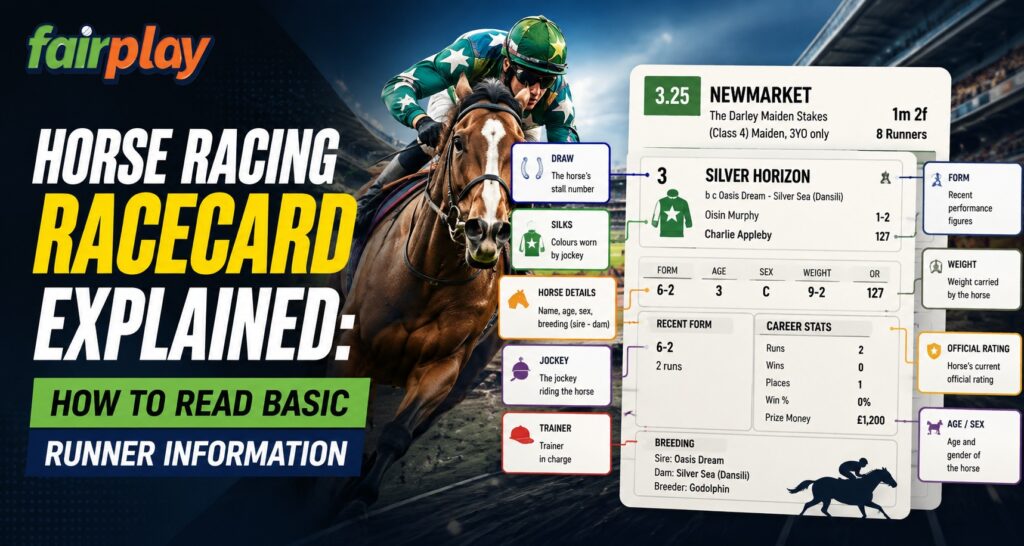
A horse racing racecard contains important details that help followers understand a race before it begins. For beginners, the information may appear complicated because it includes runner names, form details, jockey information, and race conditions. For users exploring horse racing updates through Fairplay24, learning how to read a basic racecard can make it easier to understand participating horses and important pre-race information.
What Is a Horse Racing Racecard?
A racecard is a detailed guide that provides information about a specific horse race.
It usually includes:
- List of participating horses
- Horse numbers
- Jockey details
- Trainer information
- Recent performance records
- Race conditions
Racecards are used by fans, analysts, and followers to understand the background of each runner before the event starts.
Before checking racing information through Fairplay24 in Login resources, beginners should understand the basic sections of a racecard.
Why Is a Racecard Important?
A racecard helps provide a complete overview of the race.
It allows users to review:
- Which horses are competing
- Previous performances
- Racing experience
- Trainer and jockey details
- Important race conditions
Instead of looking only at a horse’s name, a racecard provides additional context that can help explain a runner’s background.
Understanding Horse Names and Numbers
The first section beginners usually notice is the list of runners.
Each horse normally has:
- A race number
- A horse name
- A starting position or stall number
The race number Helps identify the horse during the event, while the stall position may provide information about where the horse begins the race.
Understanding these details makes it easier to follow commentary and race updates.
What Does Horse Form Mean?
One of the most important parts of a racecard is the horse’s recent form.
Form shows previous race performances and is usually displayed using numbers or symbols.
It can provide information about:
- Previous finishing positions
- Recent consistency
- Racing experience
- Performance patterns
For example, repeated strong finishes may indicate a horse has been performing well recently, while inconsistent results may show changing performance levels.
However, past performance does not guarantee future results.
Understanding Trainer and Jockey Information
Trainer and jockey details are important parts of a racecard.
The trainer is responsible for preparing the horse, while the jockey controls the horse during the race.
Important details include:
- Trainer experience
- Jockey record
- Previous partnerships
- Performance history
The relationship between horse, trainer, and jockey can influence how a race develops.
What Are Weight Details?
Weight information is another important section of a racecard.
It shows the amount of weight a horse is carrying during the race.
Weight can influence:
- Speed
- Stamina
- Race strategy
- Performance over different distances
Different races may have different weight conditions depending on the competition format.
Understanding Race Distance and Conditions
Every racecard includes information about race conditions.
This may include:
- Race distance
- Track type
- Surface conditions
- Race category
Some horses perform better over shorter distances, while others may be stronger in longer races.
Track conditions can also affect performance because some horses prefer specific surfaces or weather conditions.
How Beginners Can Read a Racecard Step by Step
New followers can use a simple approach:
Step 1: Check the Race Details
Look at:
- Distance
- Starting time
- Track conditions
- Number of runners
Step 2: Review Runner Information
Check:
- Horse names
- Recent form
- Trainer details
- Jockey information
Step 3: Compare Performance History
Look for:
- Recent results
- Consistency
- Previous race experience
This process helps beginners understand the information provided without becoming overwhelmed.
Common Mistakes When Reading Racecards
Beginners often focus on only one detail instead of reviewing the complete picture.
Common mistakes include:
- Looking only at previous wins
- Ignoring race distance
- Not checking track conditions
- Overlooking trainer and jockey details
A racecard provides multiple pieces of information, and each section can contribute to understanding the race.
How Technology Makes Racecards Easier to Access
Modern platforms allow users to view race information quickly through mobile devices.
Digital racecards often include:
- Updated runner lists
- Race details
- Performance information
- Easy navigation
Users following updates through the Fairplay24 App can access racing information more conveniently while learning how different racecard sections work.
Why Learning Racecards Helps Beginners
Understanding racecards improves general knowledge of horse racing.
Benefits include:
- Better understanding of race structure
- Easier comparison between runners
- Improved awareness of important factors
- More informed race discussions
A racecard is not just a list of horses; it is a complete information guide for understanding the event.
Conclusion
A horse racing racecard provides valuable information about runners, including names, form, jockey details, trainers, weight, and race conditions. For beginners, learning how to read these sections is an important step toward understanding horse racing better.
For followers using Fairplay24 Com to explore racing information, understanding racecards makes it easier to follow events and interpret important details. By reviewing all available information instead of focusing on one factor, beginners can develop a clearer understanding of race preparation and structure.
Frequently Asked Questions
What is a horse racing racecard?
A racecard is a guide containing information about horses, jockeys, trainers, and race conditions.
Why should beginners learn to read racecards?
Racecards help beginners understand participating horses and important factors before a race.
What does horse form mean on a racecard?
Horse form shows previous race performances and finishing results.
Why are jockey and trainer details included?
They provide information about the people responsible for preparing and guiding the horse.
Does good form guarantee a horse will win?
No. Previous performance is only one factor and does not guarantee future results.
What racecard details should beginners check first?
Beginners should start with race conditions, runner information, recent form, and jockey details.