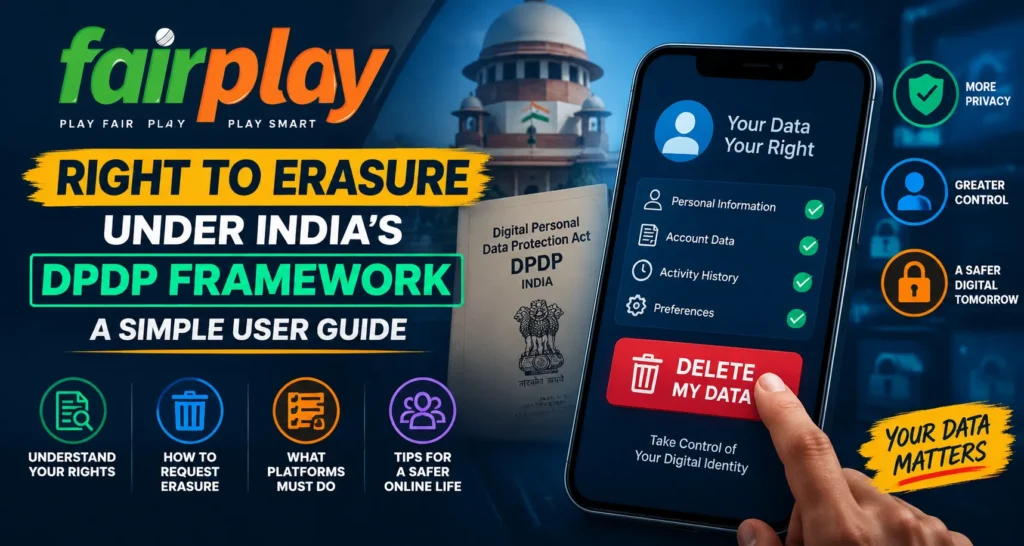
Data privacy has become an important part of digital services as users share personal information across different online platforms. Understanding what happens to personal data and what rights users have can help people make better privacy decisions. On Fairplay24, users interested in responsible data management should understand how India’s Digital Personal Data Protection (DPDP) framework addresses personal information control, including the concept of erasure requests.
The right to erasure is connected with giving individuals more awareness and control over how their personal information is managed in the digital environment.
What Is the Right to Erasure?
The right to erasure refers to an individual’s ability to request the removal of personal data under certain conditions.
In simple terms, it allows users to ask an organization to delete information that is no longer required or should no longer be processed under applicable rules.
This concept focuses on:
- Greater user control
- Responsible data handling
- Privacy awareness
- Transparent processing practices
However, data deletion rights are not always unlimited. Certain situations may require organizations to retain specific information.
Understanding Data Protection Under India’s DPDP Framework
India’s Digital Personal Data Protection framework establishes rules for handling personal data and defines responsibilities for organizations processing user information.
The framework focuses on:
- Lawful data processing
- User consent
- Data security
- Transparency
- Individual rights
Organizations handling personal information are expected to provide appropriate methods for users to understand and manage their data choices.
After completing a Fairplay24 in Login process, users should review available privacy options and understand how their information is handled.
Why Is the Right to Erasure Important?
The ability to request deletion gives users more control over their digital identity.
It can help when:
- Personal data is no longer needed
- A user stops using a service
- Information is outdated
- Privacy preferences change
- Users want better control over stored information
The right Supports the idea that personal data should not be kept unnecessarily without a valid reason.
How Does a Data Erasure Request Work?
The process for requesting data deletion may vary depending on the organization and available privacy systems.
Generally, users may need to:
- Identify the data they want removed
- Submit a request through an available privacy channel
- Complete required verification
- Wait for the request to be reviewed
- Receive confirmation or an explanation
Verification is important because organizations need to confirm that the request comes from the actual data subject.
Does Erasure Mean All Data Is Deleted Immediately?
A common misunderstanding is that every piece of personal information must be removed instantly after a request.
In reality, some information may need to be retained because of:
- Legal requirements
- Security obligations
- Fraud prevention measures
- Regulatory responsibilities
- Record-keeping needs
The purpose of the framework is responsible data management, not removing information in situations where retention is required.
Difference Between Data Erasure and Account Closure
Many users confuse deleting personal data with closing an account, but they are different actions.
Account Closure
Account closure generally means:
- Ending access to a service
- Stopping future account activity
- Closing a user profile
Data Erasure Request
Data erasure focuses on:
- Removal of personal information
- Privacy preferences
- Data processing choices
A user may close an account without all data being immediately removed if retention rules apply.
What Information May Be Included in an Erasure Request?
Depending on the situation, users may request removal of personal information such as:
- Profile details
- Contact information
- Stored preferences
- Certain activity-related information
The exact scope depends on the type of data collected and applicable requirements.
Users managing privacy settings through the Fairplay24 App should understand what information is stored and how deletion requests work.
Why Verification Is Required Before Data Deletion
Verification protects users by preventing unauthorized deletion requests.
Without verification, someone else could attempt to remove another person’s information.
Verification helps ensure:
- Correct user identification
- Protection against misuse
- Accurate handling of privacy requests
This security step is an important part of responsible data management.
Limitations of the Right to Erasure
While data deletion rights provide important control, they may have limitations.
Organizations may need to keep certain information for reasons such as:
- Compliance obligations
- Legal documentation
- Security monitoring
- Dispute resolution
Users should understand that privacy rights operate alongside other legal responsibilities.
How Users Can Manage Personal Data Better
Users can improve their privacy management by following simple practices.
Helpful steps include:
- Reviewing privacy policies
- Checking account settings regularly
- Understanding consent options
- Removing unnecessary permissions
- Updating outdated information
- Using secure login practices
Good privacy habits help users maintain better control over personal information.
Importance of Transparent Data Practices
Clear privacy practices help build trust between users and digital platforms.
A transparent approach should explain:
- What data is collected
- Why it is collected
- How long it may be stored
- How users can exercise their rights
When accessing services through Fairplay24 Com, understanding privacy processes can help users make informed decisions.
How Data Rights Support Digital Trust
Privacy rights encourage organizations to handle personal information responsibly.
A strong data protection approach benefits users through:
- Better transparency
- Improved security awareness
- Greater control over personal information
- Clearer communication
As digital services continue to grow, understanding data rights becomes increasingly important.
Conclusion
The right to erasure under India’s DPDP framework gives users greater awareness and control over how their personal information is managed. While users can request deletion of certain data, organizations may still need to retain specific information due to legal or security requirements.
Understanding the difference between erasure requests, account closure, and data retention helps users make informed privacy decisions. By reviewing privacy settings and understanding available rights, users can take a more active role in managing their digital information.
FAQs
What is the right to erasure under the DPDP framework?
The right to erasure allows users to request deletion of personal data under applicable conditions.
Does a data deletion request remove all information immediately?
No. Some information may need to be retained due to legal, security, or regulatory requirements.
Is account closure the same as data erasure?
No. Account closure ends access to a service, while erasure focuses on removing personal information.
Why is verification needed for deletion requests?
Verification helps confirm that the request is made by the actual data owner.
Can organizations refuse an erasure request?
In some situations, data may need to be retained due to legal or security obligations.
How can users improve control over personal data?
Users can review privacy settings, understand consent options, and regularly check how their information is managed.